Category: travel-log

Our Real-Life Story

  • Melbourne Day7&8

    Melbourne Day7&8

    The Caravan Hunting Marathon—Dealer Vetting, Australian Hospitality, and a Million-Dollar Dilemma

    After experiencing our very first individual inspection, we realized we desperately needed a benchmark to judge used caravans properly. To build our knowledge, we dedicated the next two days to a massive caravan hunting marathon, stretching from commercial yards to deeply personal backyard inspections across Melbourne.

    Day 7: The Used Commercial Yard and Our First Taste of Aussie “Paper-Wrapped” Takeout

    On Day 7, we headed straight to ECW Caravan dealership
    in Bacchus Marsh first thing in the morning. After parking our Pajero in the front lot, we walked into the massive yard where rows upon rows of pre-owned caravans were lined up.

    It was a completely different world compared to the brand-new commercial dealerships we had visited before. Those shiny, pristine models felt a bit too “glitzy” and sterile, making it hard to imagine our actual travel life in them. In contrast, this sea of well-loved, weathered used caravans felt incredibly welcoming and realistic. It matched exactly what we had been visualizing for our journey.

    As soon as we stepped onto the grounds, a friendly salesman approached us. I told him we had seen a listing online that caught our eye: a used caravan made by Spaceland that featured a rooftop air conditioner.
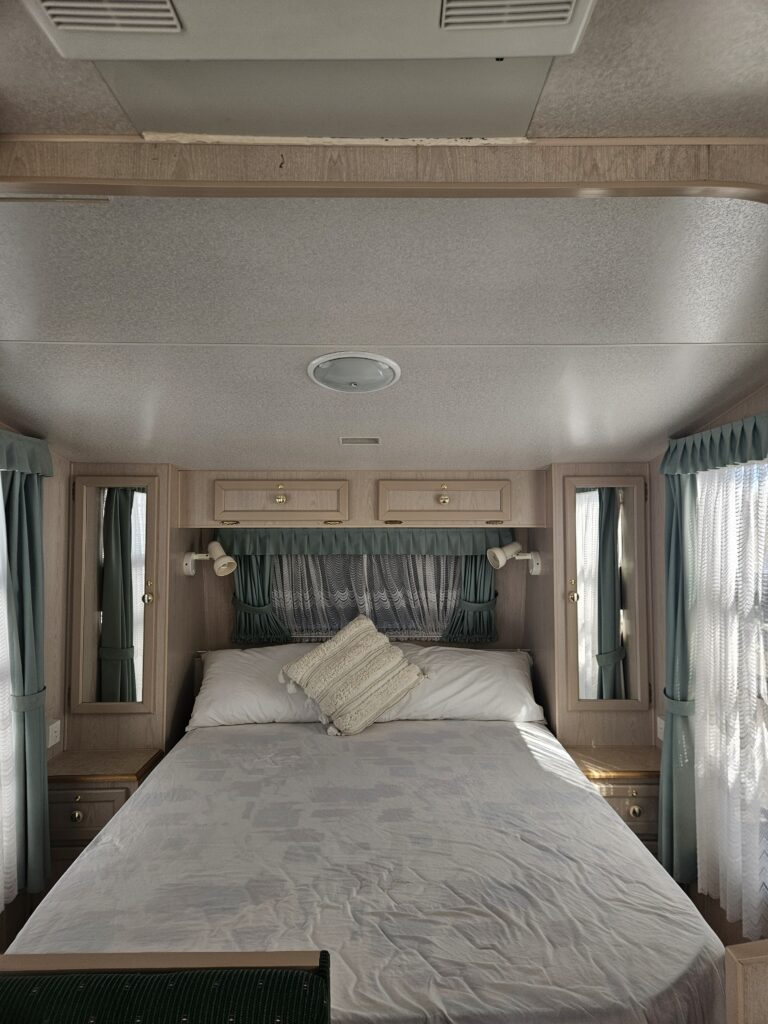
    Because it was a commercial dealership, both the exterior and interior were meticulously detailed and detailed—leaving a phenomenal first impression. However, dealership premiums are real. While our strict initial budget was $12,000 AUD, this unit was priced closer to $15,000 AUD.

    More importantly, we made a crucial technical discovery. Even though it was a rooftop air conditioner, it was completely manual and did not feature an infrared remote receiver.
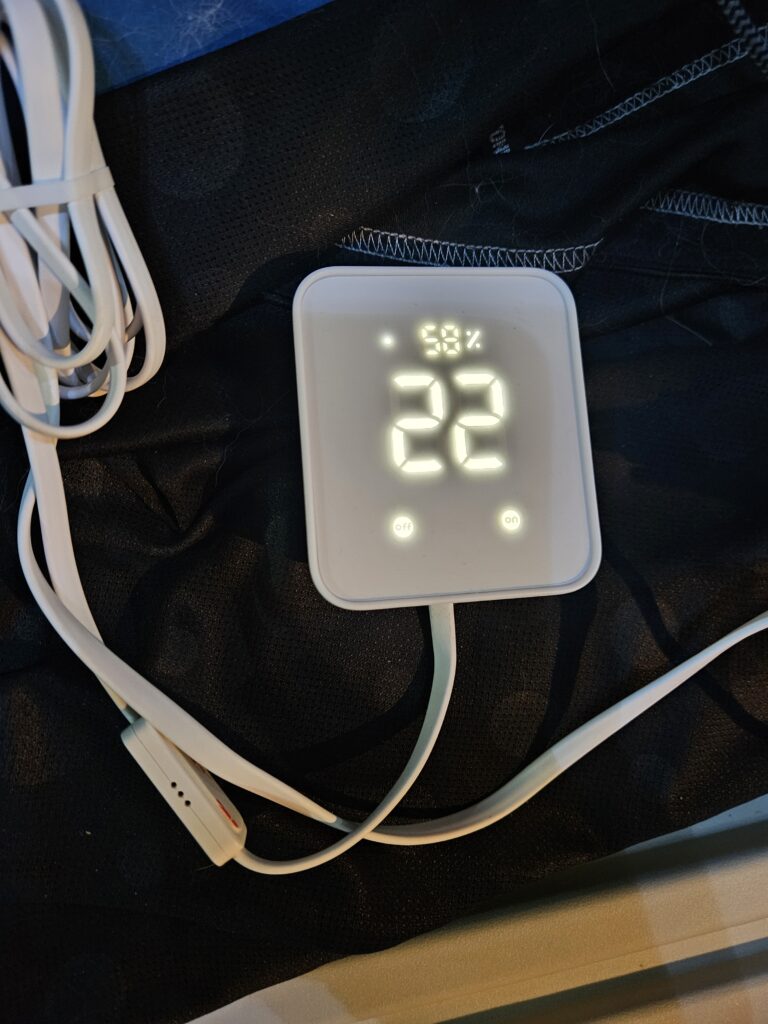
    We had blindly assumed that all rooftop ACs utilized infrared remotes, which meant our SwitchBot Hub 2 setup would be utterly useless on this model. Since remote temperature control is a non-negotiable safety feature for traveling with our cat, BELL, this $15,000 manual unit was an immediate dealbreaker.
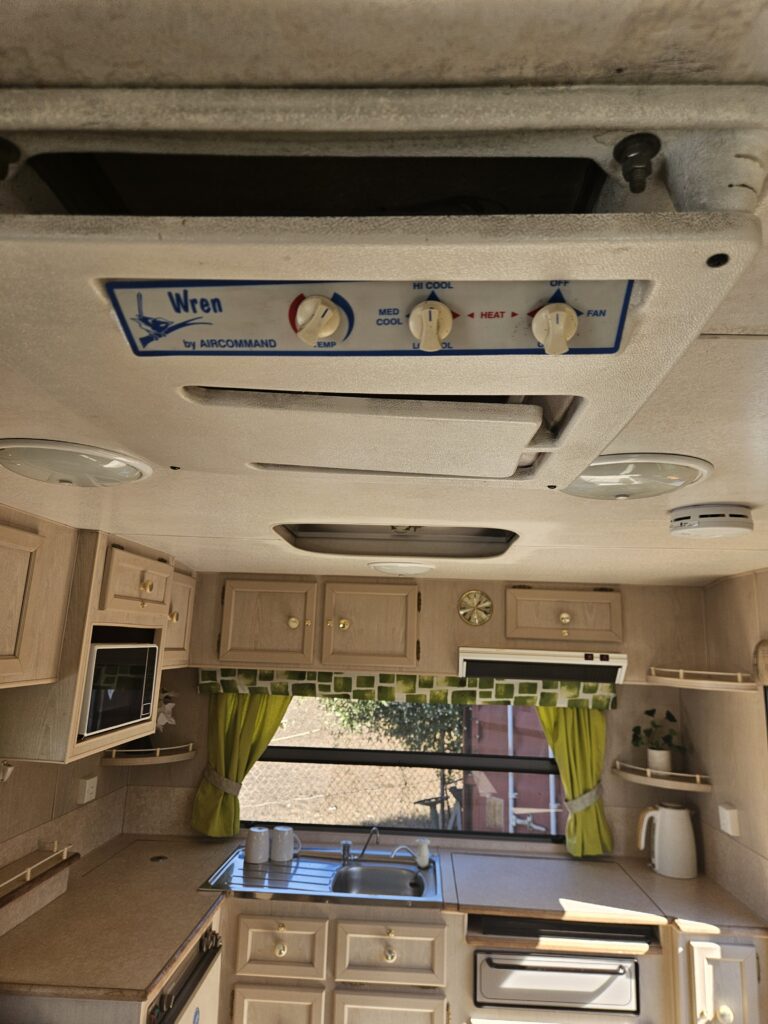
    More importantly, we made a crucial technical discovery. Even though it was a rooftop air conditioner, it was completely manual and did not feature an infrared remote receiver.
    We had blindly assumed that all rooftop ACs utilized infrared remotes, which meant our SwitchBot Hub 2 setup would be utterly useless on this model. Since remote temperature control is a non-negotiable safety feature for traveling with our cat, BELL, this $15,000 manual unit was an immediate dealbreaker.

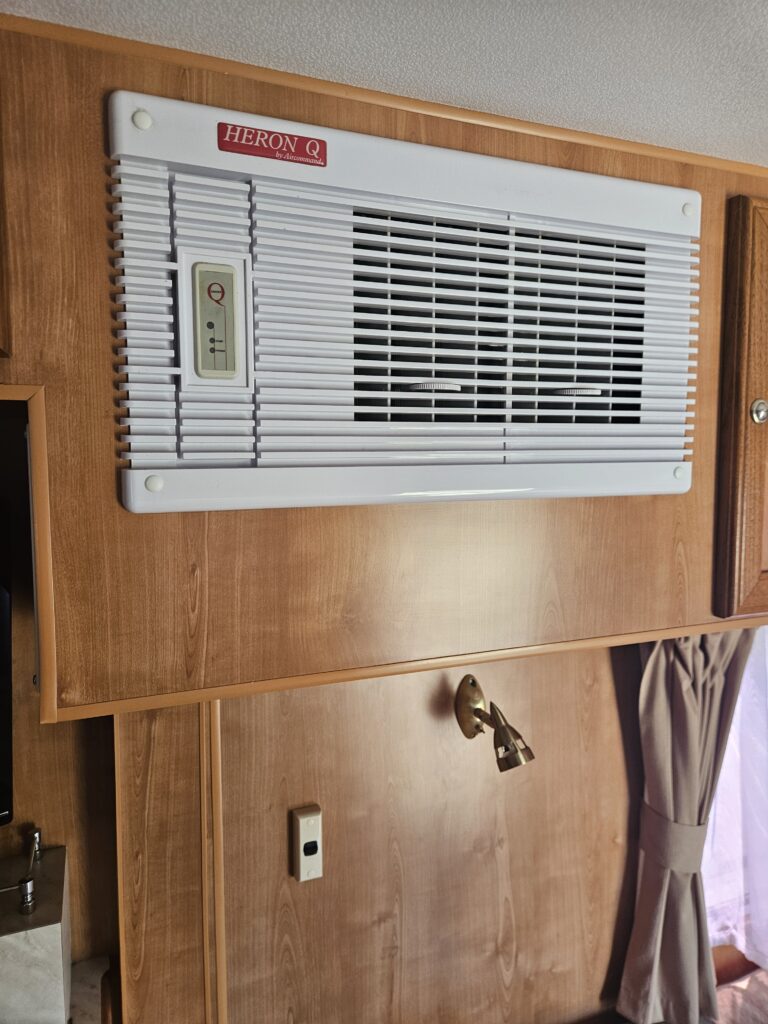
    We browsed the rest of the yard, but every other caravan featuring a rooftop AC shot past the $30,000 AUD mark. However, the trip wasn’t wasted because we made another massive breakthrough: we discovered a non-rooftop, built-in air conditioner system called the Heron Q, which is infrared remote-controlled! Up until now, we had only been filtering Facebook Marketplace listings for “rooftop” units. Realizing that under-bench or built-in models like the Heron Q opened up a whole new world of options completely expanded our search horizons.
    Realizing “This is Australia” Through Our First Takeout

    By the time we left the dealership, it was around 12:00 PM—perfect timing for lunch. We decided to try our very first traditional Australian takeout at Georges Fish & Chip Shop in Bacchus Marsh.

    We ordered a simple, classic menu item: the “Tea for Two” pack for $26 AUD. Coming from Japan, we initially thought,
    “Huh, $26 for a quick lunch feels a bit pricey,”
    but when they handed us the food, we were completely stunned by the sheer, gargantuan volume.

    The pack was loaded with a mountain of hot chips, two massive fillets of fried fish, and two deep-fried “Dim Sims” (an Australian-style giant fried dumpling). While it sounds simple on paper, every single item was absolutely massive. It was so heavy we could barely finish it! Everything was freshly deep-fried and heavily salted, making us incredibly thirsty, but it tasted amazing.

    The presentation was also a pure reflection of local culture. The food wasn’t placed in a box or a plastic container; it was literally placed directly onto about three thick sheets of plain butcher paper, wrapped tightly like a parcel, and handed over. It made me simply think, “Ah, this is so typical of Australia.”
    As a business model, I couldn’t help but laugh and think,
    “Wow, their packaging overhead cost must be close to zero—genius!”

    We grabbed a few essentials at Coles afterward and spent the evening back at our accommodation firing off messages on Facebook Marketplace. After reaching out to over 10 different sellers, we managed to book a jam-packed schedule of three separate caravan inspections for the following day. We went to sleep exhausted but determined to lock in our home-on-wheels.

    Day 8: The NAB Ghost, Australian Hospitality, and the Ultimate Caravan Dilemma

    The next morning, Facebook Marketplace reminded us of its unpredictable nature—one of the three sellers completely stopped replying, cutting our schedule down to two afternoon inspections.

    Since our morning cleared up, we decided to handle an administrative chore. The National Australia Bank (NAB) had previously messaged us saying our bank cards were ready, so we headed into a local branch to pick them up. However, once we arrived at the counter, the staff looked into the system and bluntly told us, “Actually, they aren’t here yet.”
    They promised they would call us the moment they arrived. I had a bad gut feeling right then and there—and as it turned out later, that branch never called us back a single time. Welcome to Australian banking!

    Inspection 1: Pure Hospitality and a Mansion Tour

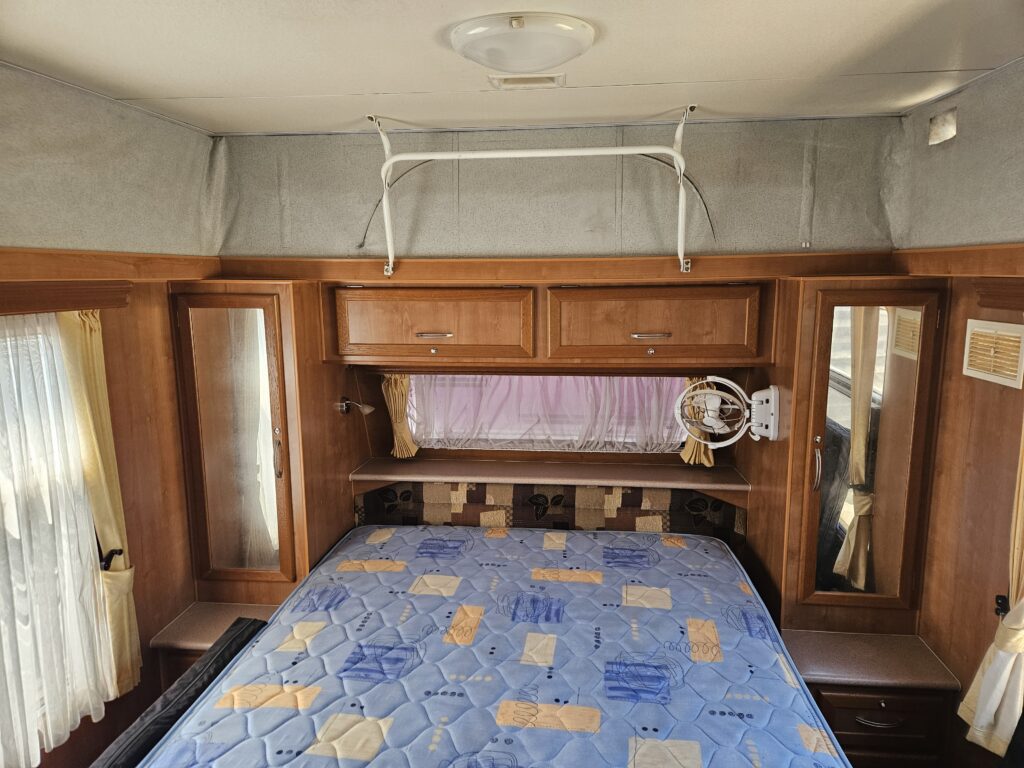
    In the afternoon, we drove out to our first individual inspection. While it didn’t have the commercial sparkle of a dealership, the caravan was incredibly clean. It wasn’t a pop-top model, but it was beautifully compact and easy to manage. Priced right around our budget at $12,500 AUD, it ticked a massive box: it had a perfectly functioning infrared remote-controlled air conditioner.
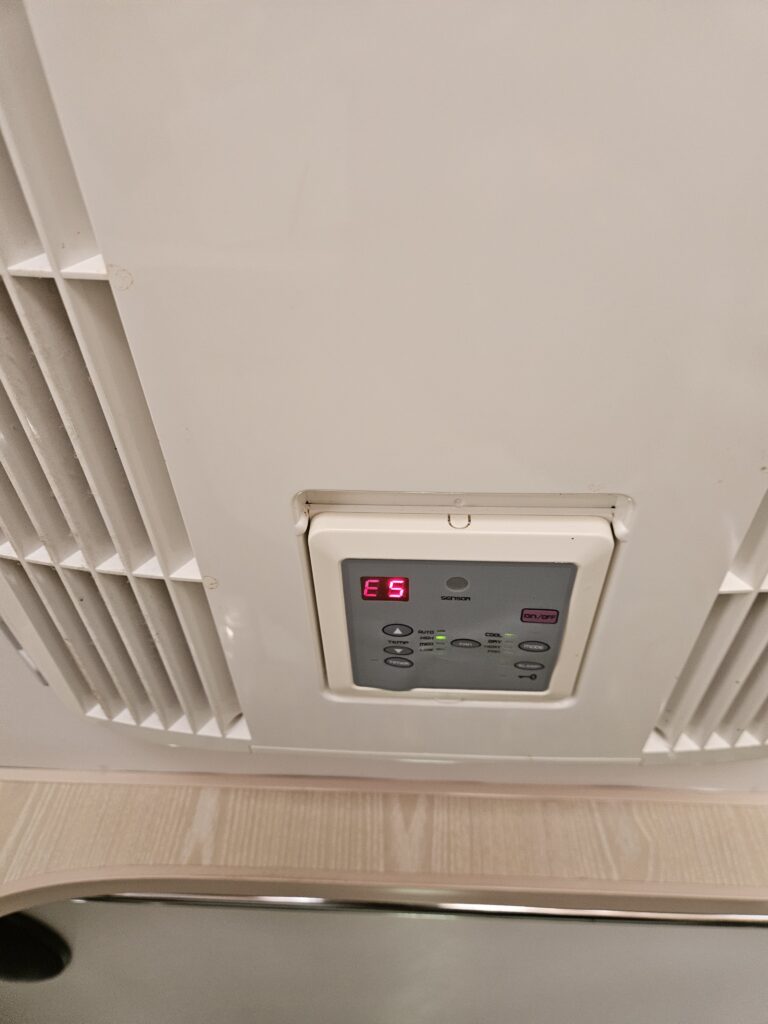
    However, it was an incredibly scorching 40°C day, and the AC was fighting for its absolute life. Even with the unit running full blast, the inside temperature hovered around 30°C. Sitting inside, I couldn’t help but worry, “If it’s already this exhausting with the AC cranked up, can BELL truly handle this heat?”
    Additionally, the tires were manufactured in 2018, meaning they were far too old for the massive long-distance road trips we planned and would require an immediate, costly replacement. A couple of minor cosmetic issues caught my eye too—one of the four stabilizer pads was missing, and a brake light cover popped right off when touched.

    But the true highlight of this visit was the seller. When I mentioned that I had absolutely zero experience towing large trailers, his face lit up with concern. He strongly urged us to take a professional towing safety course, emphasizing how challenging driving can be. Right there on the driveway, he pulled out his phone and started calling multiple towing schools on our behalf!

    As the conversation stretched on, he warmly invited us inside his home. His wife gave us a wonderful welcome, and walking through the front door, our jaws absolutely dropped at the sheer, staggering scale of the house. It featured two massive living rooms, and the layout was so gigantic it felt like you could fit three entire Japanese suburban houses side-by-side inside it.

    They generously laid out a spread of Golden Circle juice (apple & blackcurrant flavor) and a bowl of pistachios, sitting down with us for a long, casual chat. Their sweet family dog joined us too. It turns out the dog was completely obsessed with pistachios—the second I picked one up, he would lock eyes and slowly creep closer, only to be told “No!” by the owner. Watching him try his absolute best to resist temptation was incredibly adorable. We ended up staying for nearly two hours. We left the caravan on “hold,” thinking that unless the second inspection was absolutely flawless, we would buy from this wonderful family just based on how incredible they were to us.

    Inspection 2: The Perfect Specs and the Fatal Shadow

    We arrived about 30 minutes late to our second inspection, but the seller was incredibly understanding and welcomed us without issue. And wow… this caravan was spectacular.
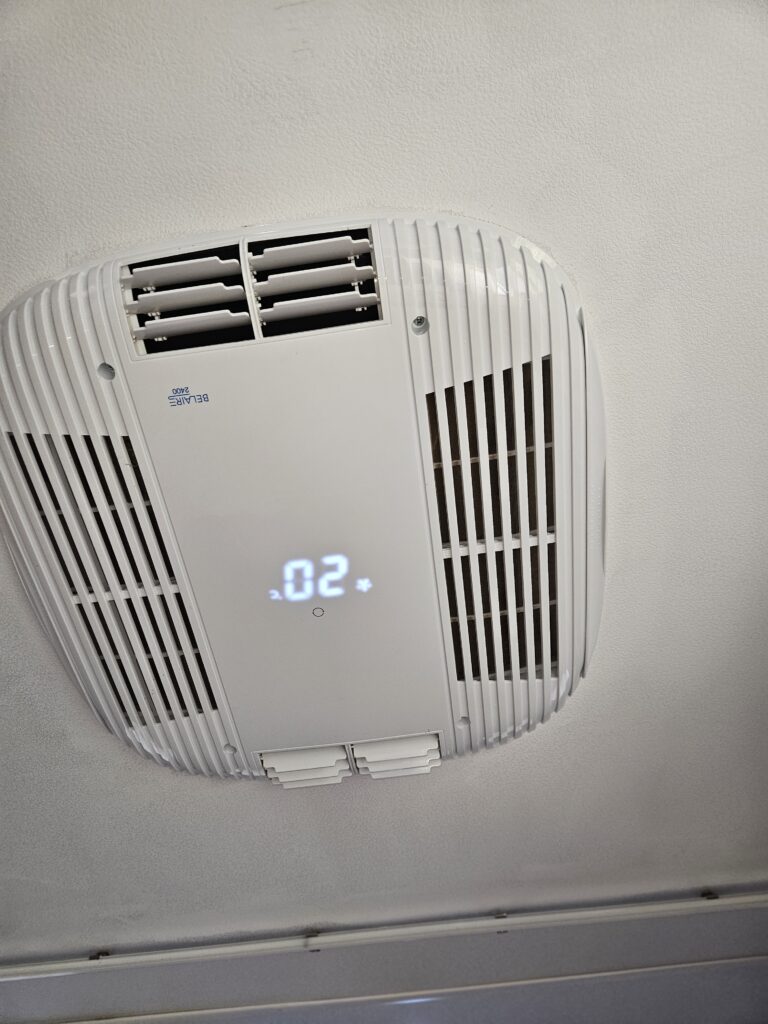
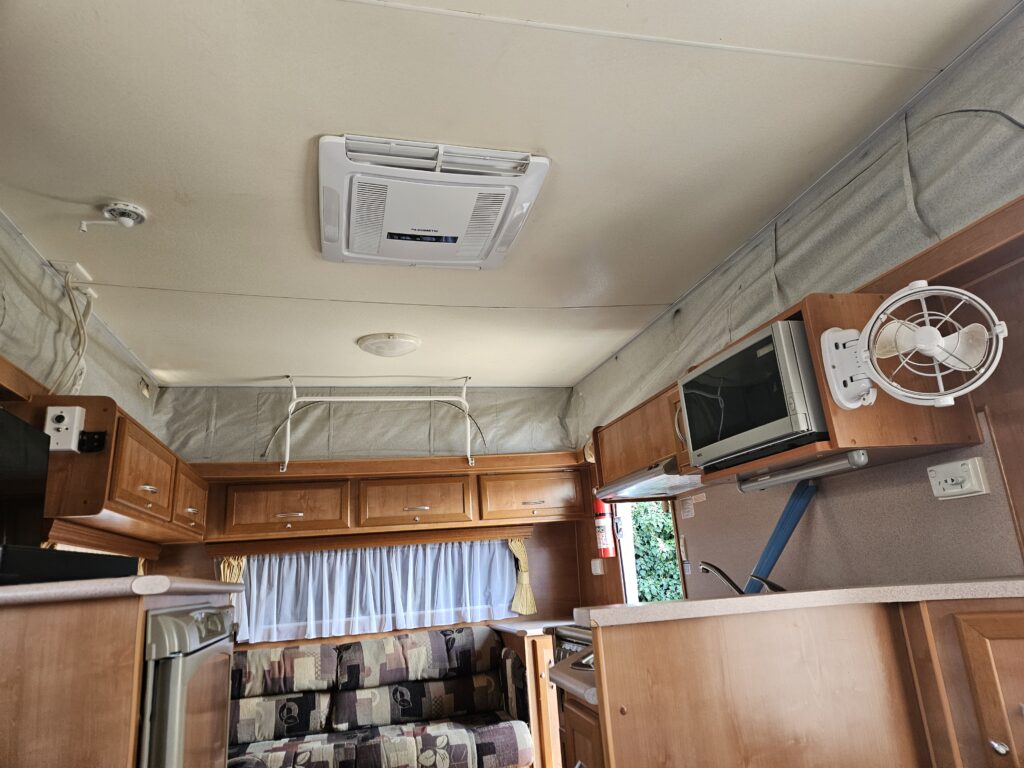
    It checked almost every single box on our dream sheet:

    • Brand: It was a Jayco, the most popular and highly sought-after brand in Australia (making future resale incredibly easy).
    • Style: A sleek pop-top model, making it aerodynamic and easier to tow.
    • Air Conditioner: A relatively new, powerful infrared remote-controlled unit.
    • Tires: Brand new, manufactured in 2025—zero replacement costs needed!
    • Price: Exactly $12,500 AUD, sitting perfectly in our comfort zone.
    • Layout: A brilliant floor plan where the middle area was incredibly wide open, with the bed, table, and chairs pushed to the ends. I immediately thought,
      “With this open floor plan, the three of us (including BELL) will feel so much less cramped living inside full-time.”
    • Appliances: It even came with a Panasonic microwave, which gave us a huge wave of familiar Japanese reliability.
    • Bonuses: The seller threw in a complete set of caravan gear—a hitch lock, stabilizer blocks, an awning (including a ground mat), and a full kit of essential tools.

    It felt like the ultimate winner. Except for one massive, terrifying catch.
    While inspecting the interior, I noticed that the corners of the ceiling had distinct black smudges. It looked suspiciously like mold. The owner insisted up and down,
    “It absolutely doesn’t leak water, I promise,”
    but in the caravan world, a rotting or compromised ceiling structure is a catastrophic, financially fatal issue. That single dark stain cast a massive shadow over the perfect specs.

    The Brain-Racking Decision & The Brake Controller Revision

    We told the seller we needed a bit of time to think it over and headed back to our accommodation. All evening, my wife and I racked our brains.

    On one hand, the first family was so incredibly kind, and their caravan was solid, but it needed new tires and the AC struggled in extreme heat. On the other hand, the Jayco had a phenomenal layout, brand-new tires, a powerful new AC, and great resale value—but that ceiling stain could be a hidden nightmare. If we are launching a long-term journey, the Jayco’s newer AC and layout seemed objectively better, but we simply couldn’t bring ourselves to pull the trigger yet.

    Amidst the caravan chaos, we also dug into the installation of the Electric Brake Controller and made a massive realization. Our Pajero currently only has a standard 7-pin plug and is missing an
    Anderson plug, which is vital for powering the caravan’s battery and fridge while driving.

    Initially, a local auto electrician quoted us $795 AUD to supply and professionally install both the Electric Brake Controller and an Anderson plug together. Since installing just a caravan-side brake controller unit on its own would cost around $890 AUD (plus we’d still be missing the Anderson plug), getting both wired directly into the car professionally for under $800 AUD was an absolute steal.

    I immediately emailed the workshop with a few follow-up questions, but I haven’t received a reply yet. Since time is ticking and we need to get this sorted, I decided I’m going to walk straight into their shop tomorrow to lock in the job in person.

    Tomorrow, I’m heading down to storm the auto electrician’s shop to get our Pajero’s towing setup booked, and one way or another, we must make the final choice between the two caravans. Which home will we choose? Stay tuned for the ultimate verdict in the next chapter!
  • Melbourne Day6

    Melbourne Day6

    A Relief from Quarantine, Our First Caravan Inspection, and the SwitchBot Smart Home Experiment

    On our sixth morning in Australia, we allowed ourselves another slightly late start. We had originally scheduled our very first caravan inspection for 11:00 AM, but the owner messaged us asking to push it back to 1:00 PM instead. Since we had no other specific plans for the morning, we were completely fine with the change.

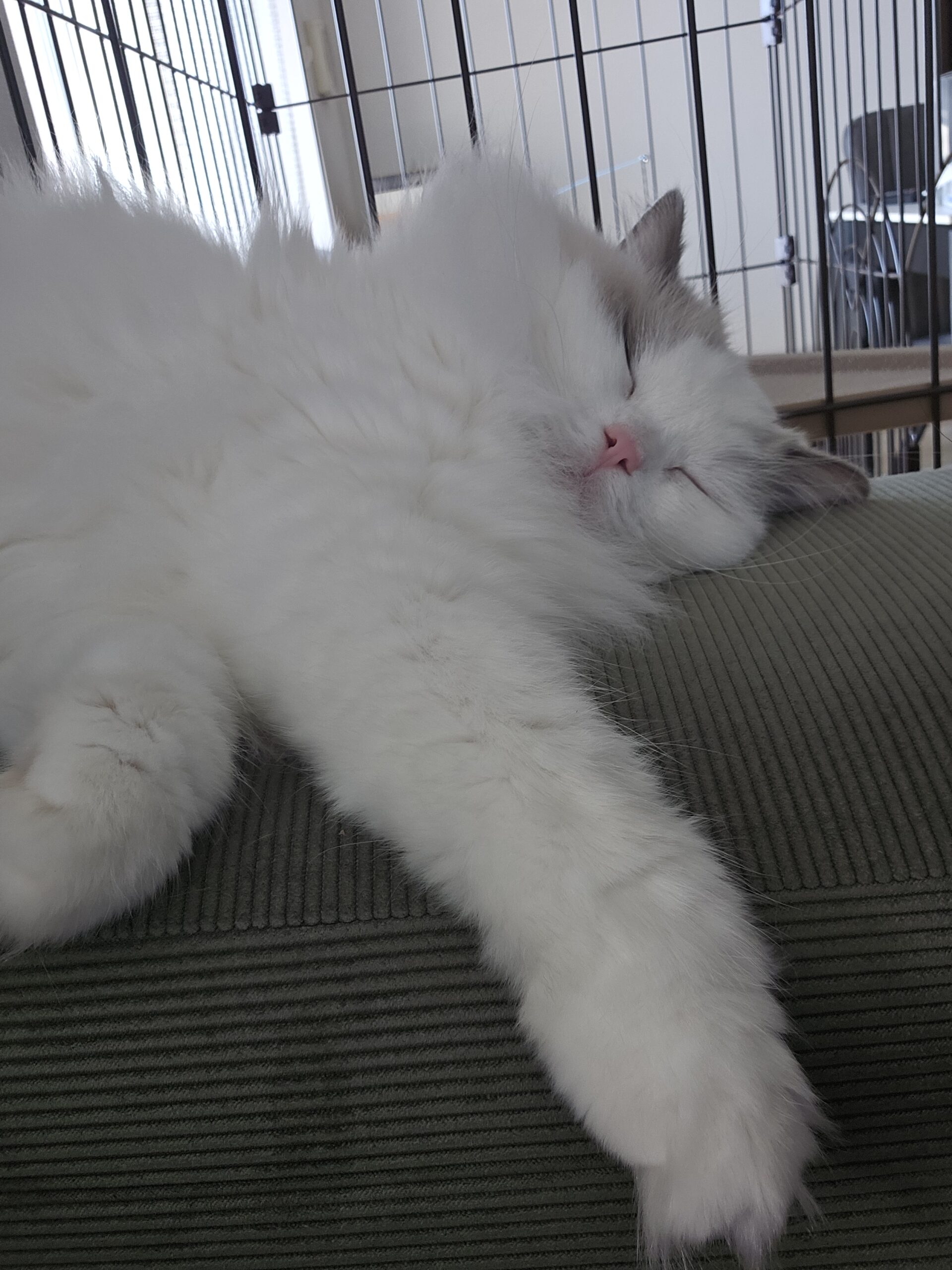
    But the real highlight of our morning arrived before we even left our accommodation. We received an update from the Government Animal Quarantine Facility about our beloved cat, BELL.

    The staff informed us that she had finally eaten some wet food!
    It was most likely the Churu treats we had rushed to deliver the day before. Knowing that she was finally getting some food into her system brought a massive wave of relief that washed right through me. On top of that, the staff left a heart-melting comment saying,
    “She is very friendly and looks so happy when we pet her.”
    Hearing that everyone there was already loving her because she is such a sweet, good girl made us incredibly happy. While we are still naturally worried, being able to breathe a sigh of relief for the first time was everything.(Note: When I looked it up and consulted AI tools about it, they mentioned that weight loss is actually a very common reaction for cats going through this process, which made me think, “Ah, so it really is a frequent thing…”)

    1. Our Very First Caravan Inspection: Impressions of a Used Pop-Top

    At 1:00 PM, we headed out for the caravan trailer inspection. Up until today, we had only looked at brand-new models at commercial dealerships, making this our very first time seeing a used pop-top caravan in person.

    My initial impression was that it didn’t feel overwhelmingly massive. Seeing it hooked up, I confidently thought, “With this size, I could definitely tow it with our Pajero.”
    However, looking at it closely, it was clear that the vehicle hadn’t been meticulously maintained. There were cobwebs scattered around, a thick layer of dust coating the surfaces, and out of the four stabilizing legs, one was missing the dangling plastic pad at the foot. Still, considering how caravan prices have skyrocketed recently, it was listed at a quite affordable price—around $15,000 AUD—so I wondered if this level of wear and tear was just the standard for the used market. Since it was our very first time evaluating a used one, it was hard to judge.

    Unlike our split-second decision with the Pajero, we couldn’t bring ourselves to buy it on the spot.

    1. Turning Sci-Fi into Reality: Testing the SwitchBot Remote AC Setup

    Even though the appearance was a bit rough, we had one crucial mission to execute during this inspection. I asked the owner if we could test out a gadget we had brought all the way from Japan: the SwitchBot Hub 2.

    For us, an infrared remote-controlled air conditioner
    was an absolute dealbreaker for the caravan. It wasn’t just a luxury for us; it was a life-saving necessity for traveling with our beloved cat. The SwitchBot Hub 2 is an incredible device that allows you to monitor conditions and completely control the air conditioner remotely via a smartphone app while you are out. Even better, it features an automated climate control system that can automatically turn the AC on to warm the cabin if it gets too cold, or cool it down if it gets too hot.

    Our plan was to utilize this technology to ensure BELL would always stay at the absolute perfect, optimal temperature inside the caravan, no matter where we were parked.

    We set it up and ran the test. To my absolute amazement, the command went through effortlessly via the app, and the AC responded perfectly!
    Seeing our desktop theory transform into flawless, real-world reality filled us with immense confidence. It proved that we could truly create a safe, automated sanctuary to welcome BELL into.

    Ultimately, though, we still held back from making a snap decision on this specific caravan. On paper, the specs were phenomenal—it came with a full storage cover, a massive television antenna, and a robust off-grid solar power setup. Yet, the slight grime on the exterior combined with the fact that it was about $3,000 AUD over our initial target budget made us pause.

    We politely informed the owner that we wanted to explore a few more options before making a final decision, and we headed back.

    1. Filling Up the Calendar and a Job Lead We Must Approach Wisely

    Our experience today made us realize we needed a baseline to judge used caravans properly. To determine just how rare or valuable today’s caravan actually was, we decided that tomorrow we would visit a commercial used caravan specialist: ECW Caravan dealership. If we happen to find the perfect match there, we are fully prepared to buy it on the spot.

    Furthermore, for the day after tomorrow, we managed to find two promising caravans on Facebook Marketplace that fit perfectly within our budget and come equipped with infrared air conditioning. Incredibly, we were able to schedule inspections for both of them on the exact same day at different times!

    These two listings are located in Dandenong, which is quite far from Deer Park where we are currently staying, as it sits on the opposite side of Melbourne’s CBD. However, we turned this long drive into a strategic opportunity. The mechanic workshop where the previous owner of our Pajero had all the major servicing done happens to be located over in that same general direction.

    To be honest, the seller of the Pajero had promised multiple times to email us the digital service and repair history records, but despite our constant reminders, they still haven’t sent them. Having given up on the seller, we decided we would walk straight into the workshop ourselves during our trip out that way to confirm the vehicle’s maintenance history verbally.

    Just like that, our schedule for tomorrow and the day after completely filled up with caravan hunting and logistics.

    To add to the day’s developments, we received a message this evening from a farm work contractor simply asking, “Are you still looking for a job?” While it’s not a concrete job offer yet, it definitely feels like a step forward. However, knowing the risks of sketchy contractors in the agricultural sector, we need to be extremely cautious. I immediately sent a reply to check their specific terms, conditions, and locations, making sure to vet them thoroughly before taking things further.

    With things moving forward, I also dove into resolving a technical issue I had been putting off: the installation of an Electric Brake Controller for towing. I had been heavily debating whether to install a trailer-mounted unit (which goes on the caravan side) or a vehicle-mounted unit (which goes inside the car).

    • Caravan-mounted unit: A beginner can easily install it themselves in no time.
    • Vehicle-mounted unit: Requires leaving the car at an auto electrician workshop for a professional installation.

    I have been researching which option makes more financial sense and is more cost-effective, so I fired off an email to a local auto electrician to get a formal quote.

    By the end of the day, the weather remained intensely hot because the rain never came. Melbourne’s weather is notorious for swinging drastically from scorching hot to freezing cold in the blink of an eye. Sitting in our room, I couldn’t help but think that anyone who struggles with extreme, sudden temperature shifts might find living here a bit of a challenge!

    What’s Next?

    Tomorrow, we plunge into the commercial market as we head to a used caravan dealership to expand our knowledge. The day after, we cross the city for a double-header of Marketplace inspections and a visit to the mechanic shop. How will we ultimately solve our caravan dilemma? Stay tuned for the next chapter of our journey!

  • Melbourne Day5

    Melbourne Day5

    A Slow Morning, Finding the Ideal Caravan, and a Heartbreaking Dash to the Animal Quarantine Facility

    Ever since arriving in Melbourne, we had been waking up before 7:00 AM every single day, rushing through paperwork and sourcing essentials. But on our fifth morning, with our Pajero secured and a clear strategy for our future home finally locked in, a wave of relief washed over us. For the first time, we allowed ourselves to sleep in. By the time we opened our eyes, it was around 9:30 AM—a beautifully relaxed start to the day.

    For breakfast, we tried some of the local oranges we had picked up at the Fresh Market. Biting into one, we were instantly struck by how incredibly juicy it was compared to Japanese oranges. Instead of having a dense, fleshy texture, it exploded with liquid the moment you bit into it, feeling almost like drinking pure juice. It was a fascinating little reminder of how much flavor and texture can vary from country to country.

    1. Scouting the Perfect Caravan on Facebook Marketplace

    After breakfast, we dove into Facebook Marketplace to hunt for a used caravan that matched our newfound criteria: a compact, low-profile pop-top around 5 meters long. Our wishlist was specific:

    • A manageable pop-top model
      for easy towing
    • An infrared remote-controlled air conditioner
      to survive the harsh Australian summer
    • A budget of around $12,000 AUD

    It didn’t take long before a particular listing caught our eye. It was slightly over our budget, but it checked every single box, and the model year was quite reasonable. To make things even better, it came fully equipped with a robust solar power system setup for off-grid living
    —perfect for staying at unpowered remote campsites.

    Anxious not to let it slip away, I immediately messaged the owner. To my surprise, they replied almost instantly, saying, “You can come down for an inspection tomorrow.” The speed of Facebook Marketplace is mind-blowing. We bought our Pajero on the spot, and now we couldn’t help but feel a thrill of anticipation wondering if the same thing would happen with this caravan tomorrow.

    1. An Email from Quarantine: Racing to Help BELL

    Just as our excitement was building, a heavy, sinking feeling hit us. An email notification popped up from the Government Animal Quarantine Facility.
    Reading the contents made my blood run cold. Our beloved cat, BELL, who had braved the long journey across the ocean with us, was struggling to adapt and was barely eating her food
    . The notice stated that her weight, which was around 4.4kg before departure,had already dropped to 4.2kg.
    They informed us that if there were any familiar treats or foods she loved back home, we could mail them to the facility, and the staff would try feeding them to her.

    A 0.2kg weight loss is a severe drop for a small cat’s body. “We can’t wait for the mail. It will be a million times faster if we drive there and deliver it ourselves!” We grabbed the keys and bolted out the door.

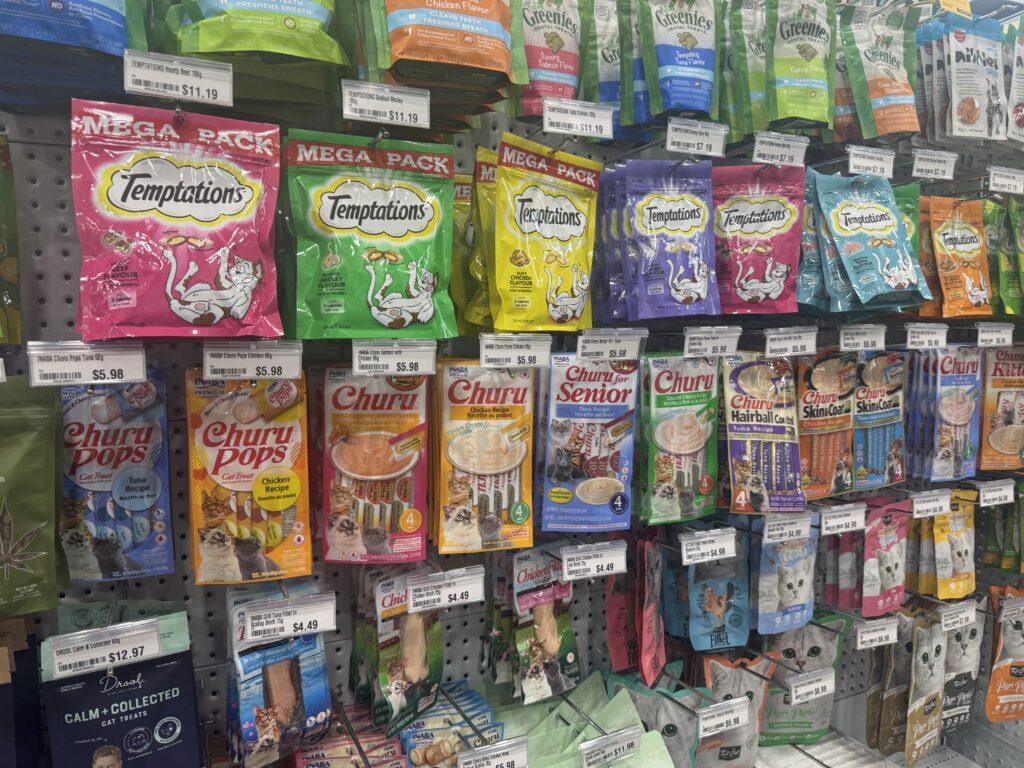
    Our first mission was to find “Ciao Churu,” the Japanese liquid cat treat that BELL would absolutely never turn down, no matter what. Desperate to give her something familiar from home, we rushed around Melbourne, hitting up various Asian grocery shops, massive supermarkets, and specialized pet supply stores. Unfortunately, the exact Japanese-packaged Churu was nowhere to be found.

    Knowing we couldn’t afford to waste another second, we compromised by buying two packs of the Australian version of Churu and a bag of Hill’s Prescription Diet Gastrointestinal Biome (dry food), which she used to eat back in Japan to keep her stomach settled. With the supplies in hand, we jumped into the car and made a 30-minute mad dash directly to the quarantine facility.

    The government facility was incredibly solemn and secure, surrounded by a heavy, completely locked gate. To get inside, you have to use an intercom at the entrance to explain your business. After explaining the emergency over the intercom, a staff member directed us to a slightly different entrance, and the massive gate slowly opened to let us in.

    Once inside the grounds, we were only allowed as far as the office reception door. Under no circumstances were we permitted to enter the actual boarding area to see our sweet girl. However, the receptionist at the office was incredibly kind. They took the time to properly read the detailed note we attached to the food, which explained: “Our cat doesn’t eat immediately when food is served; she prefers to eat at her own pace when it’s completely quiet. Please leave her food bowl out and do not take it away.”
    The staff member reassuringly told us, “I’ll pass this on to the handlers for you.”

    With the handoff completed and the staff taking care of the rest, we quietly wrapped up our business and left the facility.

    Getting back into the car, an overwhelming wave of sadness hit us. Imagining how lonely, terrified, and exhausted BELL must be feeling right now in that unfamiliar isolation facility completely broke our hearts. Knowing that she was suffering so much that she couldn’t even eat, I thought to myself that I never want to put this child on an airplane ever again. The intense anxiety and psychological stress took a massive toll on me, too—I noticed that small bumps and rashes had broken out all over my own skin from the sheer worry.

    1. Our First Bunnings Experience and Defensive Budgeting with Cheap Pasta

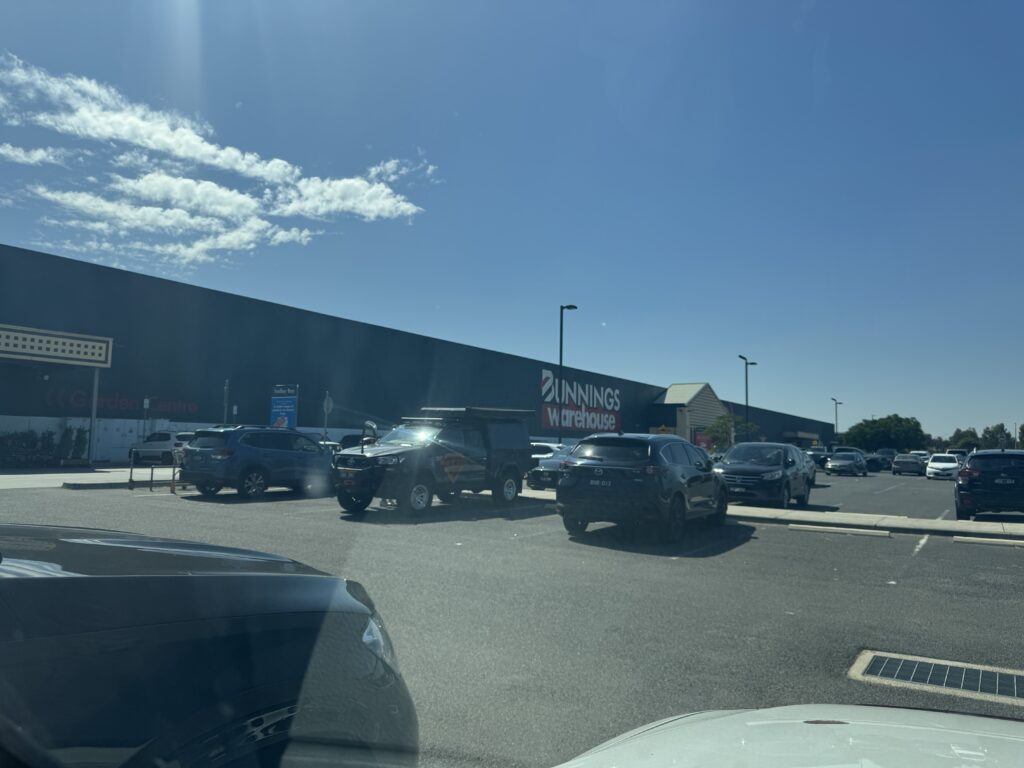
    Though our hearts were aching, we knew we had done everything humanly possible as her parents for the day. Trying to shift our heavy mindset, we decided to visit Bunnings
    for the very first time—a massive warehouse chain that every local talks about.

    We walked in with zero expectations, but the moment we pulled into the parking lot, the sheer scale of the place left us completely stunned. “This place is absolutely gargantuan…”

    It was on a completely different dimension compared to home improvement centers in Japan. It literally felt like you could buy anything in the world there, though the place was such a massive labyrinth that just finding a single item looked like a workout. Still, knowing we would be doing plenty of DIY for our future caravan life and setting up an environment for BELL once she’s released, we knew we had just found a powerful, lifelong ally in Australia.

    On the way back, we stopped by a shopping mall in Epping to stock up on groceries at Coles. It was there that the local prices gave our wallets a massive sense of relief.

    We discovered that a 500g bag of pasta was a mere 90 cents, and a massive 680g jar of tomato pasta sauce was only $2 AUD.

    While eating out in Australia is notoriously expensive, this trip to Coles—combined with our Fresh Market discovery yesterday—reconfirmed that if we strictly stick to home cooking with basic ingredients, our food expenses would actually be significantly cheaper than in Japan. It gave us a tremendous boost of confidence that we could heavily defend our living expenses moving forward.

    Back at our accommodation, we cooked up a big batch of cheap spaghetti bolognese. Eating it at the table, we silently processed everything that had happened, our minds entirely consumed by one single prayer.

    “Please stay safe, BELL. Eat your food, and please get better…” Holding our beloved cat close in our thoughts, our fifth night in Australia came to a close.

    What’s Next?

    Tomorrow we are heading out for our very first caravan inspection sourced directly from Facebook Marketplace.
    We are going to check the compact pop-top caravan equipped with a solar setup and an air conditioner. Will it look as good in person as it does in the photos, and will we make another snap decision? We will also continue our job hunt online, while constantly praying for updates on BELL’s health. Stay tuned!

  • Melbourne Day4

    Melbourne Day4

    Chatting Anime with British Expats, Learning the Caravan Realities, and an Emergency Bank Notification

    After the frantic pace of our first three days in Melbourne—securing our Pajero and finalizing the vehicle transfer at VicRoads—our fourth day brought a mix of fascinating lifestyle insights, a minor heart attack, and incredibly comforting news.

    It started in the morning at our Airbnb. For the first time, we ended up hanging out in the common area and chatting with our fellow housemates. They were a pair of guys from the UK who had just arrived in Australia to work as truck drivers. They were staying at this Airbnb for the next six weeks while attending a heavy vehicle licensing course nearby in Deer Park. Interestingly, even though they were fully licensed truck drivers back in the UK, those qualifications don’t automatically transfer over to Australia.

    As we talked, we discovered they were huge anime fans. I asked them how they watched Japanese anime abroad, and they introduced me to a streaming service called Crunchyroll—something you rarely hear about back in Japan, but is apparently the absolute gold standard overseas. They also clearly loved cars. It was a great reminder of how universal hobbies like anime and car culture are; having a bit of knowledge in both areas made it so easy to bond and have a long, genuine conversation.

    1. Visiting a Caravan Dealership: Shifting Our Strategy to Pop-Tops

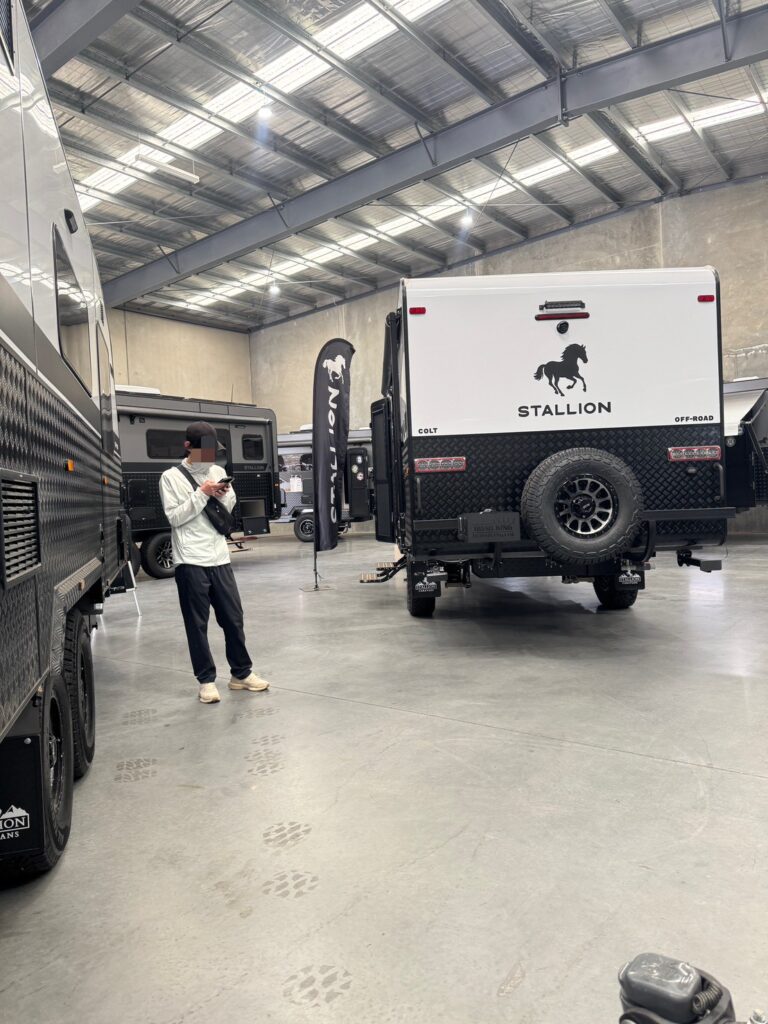
    After checking out of the conversation, we headed over to a caravan dealership as planned. We didn’t have an appointment; we just wanted to get a real look at a caravan up close to start shaping an image of what our mobile life and towing setup would actually look like.

    One thing we noticed since arriving in Melbourne is that you rarely see passenger cars towing caravans around the city center. Most locals drive smaller hatchbacks or sedans. Back in Japan, I had this image that everyone in Australia drove massive, rugged four-wheel drives, so realizing how tight city driving actually is added a bit of psychological pressure, knowing I’ll eventually be towing a massive rig through this traffic.

    When we stepped onto the dealership lot, our very first impression of the brand-new caravans was unanimous: they are absolutely gargantuan. The idea of hitching one of these to the back of our Pajero and hitting the highway felt terrifying. Every single model we saw exceeded 8 meters in total length. Since they weren’t pop-top models, the roof height easily looked to be around 3 meters. Because they were brand new, the interiors were stunningly beautiful—featuring pristine beds, full-sized refrigerators, air conditioning, and stovetops. Every single model came equipped with a private shower and toilet. With their heavy-duty off-road tires, they sat incredibly high off the ground.

    Seeing them in person was an eye-opener. It made us realize right away: “Okay, towing something this tall and heavy is going to be unrealistic for us. We definitely need to look for a pop-top model to keep the roof profile as low as possible, and we must stick strictly to a total length of around 5 meters.” It was a massive win because it gave us a crystal-clear criteria for our future search.

    But then came the price shock. I spotted a price tag reading “100,000.” Blame it on my brain still translating numbers into Japanese Yen habits, but for a split second, I thought, “Wait, 100,000 Yen is only about $1,000 AUD… that’s insanely cheap! Is this a rental price?” I actually walked up to the dealer staff and asked, “Is this price for rentals only?” The staff member looked at me with a polite smile and replied, “No, that’s the outright purchase price.”

    It was only then that the reality of the dollar sign kicked in. $100,000 AUD is a serious fortune—roughly 10 million Japanese Yen (considering 100,000 Yen is merely a drop in the bucket at around $1,000 AUD). It was a huge reality check on the exchange rate. But honestly, looking at the build quality and realizing it is literally a house on wheels, it felt like it was worth every cent.

    1. An Urgent SMS Notification and a Dash to the NAB Branch

    On our way back from the dealership, an SMS notification popped up from NAB (National Australia Bank) that instantly sent us into a panic. The message stated that our physical bank cards had just been dispatched… to the address of our future long-term Airbnb.

    We hadn’t even moved into that property yet! The current guests were likely still living there, meaning there was a massive risk that our cards would be intercepted, lost, or mistakenly taken by a stranger. I vividly remembered telling the teller during our branch setup on Day 2 that we wanted to collect the cards at the branch.

    I immediately tried contacting NAB via their customer phone line, but couldn’t get through to a human. With no time to waste, we rushed into the nearest physical NAB branch. Thankfully, the face-to-face customer service was fantastic. After explaining the situation, the teller immediately blocked the dispatched cards to prevent any fraud and ordered a fresh set. They also adjusted the system so that the new cards would be securely held at the branch for counter pickup, promising to contact us the moment they arrived. A huge weight was lifted off our shoulders.

    1. Finding Hope at the Fresh Market and a Joyful Update from Quarantine

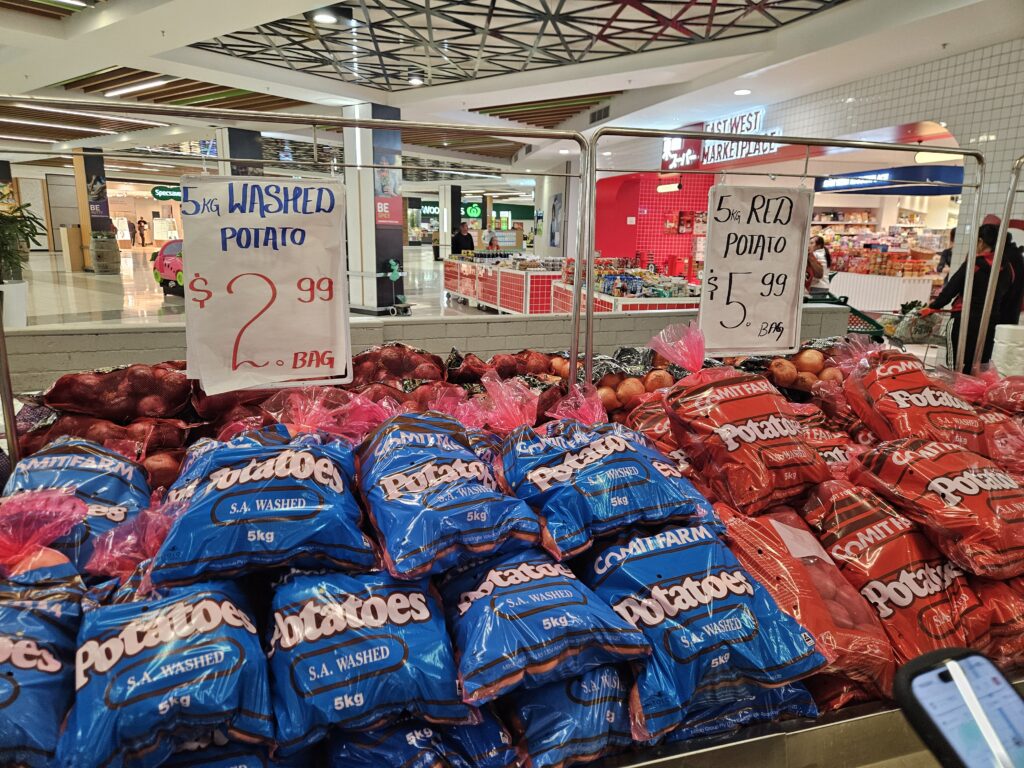
    While calming our nerves at a nearby shopping mall, we stumbled upon a local Fresh Market. Looking at the price tags, we were absolutely shocked by how cheap the fresh produce was. They were selling 5 tomatoes for just $1 AUD, and a massive 2kg bag of potatoes for only $3 AUD. It was overwhelmingly cheaper than grocery shopping in Japan. Finding this market felt like discovering a hidden sanctuary. Australia has a notorious reputation for sky-high rent and expensive dining out. But we realized that if we offset accommodation costs by living in a caravan, and offset food costs by cooking at home using these cheap fresh ingredients, we could keep our living expenses incredibly low.

    When we finally returned to our accommodation, the best news of the entire trip was waiting for us in our inbox. We received an official notification from the government animal quarantine facility: our beloved cat, BELL, had officially passed her mandatory health and biosecurity inspections upon arrival! For anyone moving pets to Australia, this is the biggest hurdle. Passing this post-entry inspection means the absolute worst-case scenarios—such as forced deportation back to Japan or immediate emergency medical intervention—are completely off the table. If any underlying health issues had been detected requiring treatment, her stay at the quarantine facility would have been automatically extended.

    Knowing she cleared all these strict requirements and is completely healthy brought tears of relief to our eyes. She has been so incredibly brave throughout this long journey from Japan, and we just wanted to shower her with praise. We fell asleep that night watching videos of our sweet BELL.

    What’s Next?
    Tomorrow marks Day 5, and the hustle doesn’t stop. Now that we have a crystal-clear image of the caravan we need—a compact, low-profile pop-top around 5 meters long—we are shifting our strategy to the used market, actively reaching out to private sellers on Facebook Marketplace to find our true match. We’ll also be diving deeper into the job hunt and starting to source the essential supplies for BELL’s upcoming release. The momentum is building, and we are ready for whatever comes next!

  • Melbourne Day3

    Melbourne Day3

    A Tech-Savvy Officeworks, DIY Tail Light Repairs, and Navigating the VicRoads Bureaucracy (Day 3)

    Our third day in Melbourne was supposed to be a straightforward logistical sprint. The main mission was to visit VicRoads (Victoria’s road authority) early in the morning to officially transfer the ownership of our newly purchased Pajero. The seller had warned us that VicRoads gets incredibly crowded, so we aimed to arrive as early as possible.

    To process the transfer, we needed two physical documents: the RWC (Roadworthy Certificate), which the seller had already obtained as a digital file, and the vehicle transfer application form, which the seller had digitally filled out right in front of us during the inspection. Since both were trapped in our smartphones as PDFs, our first stop of the day was Officeworks to get them printed.

    1. The Evolving Tech at Officeworks: Hands-on Printing

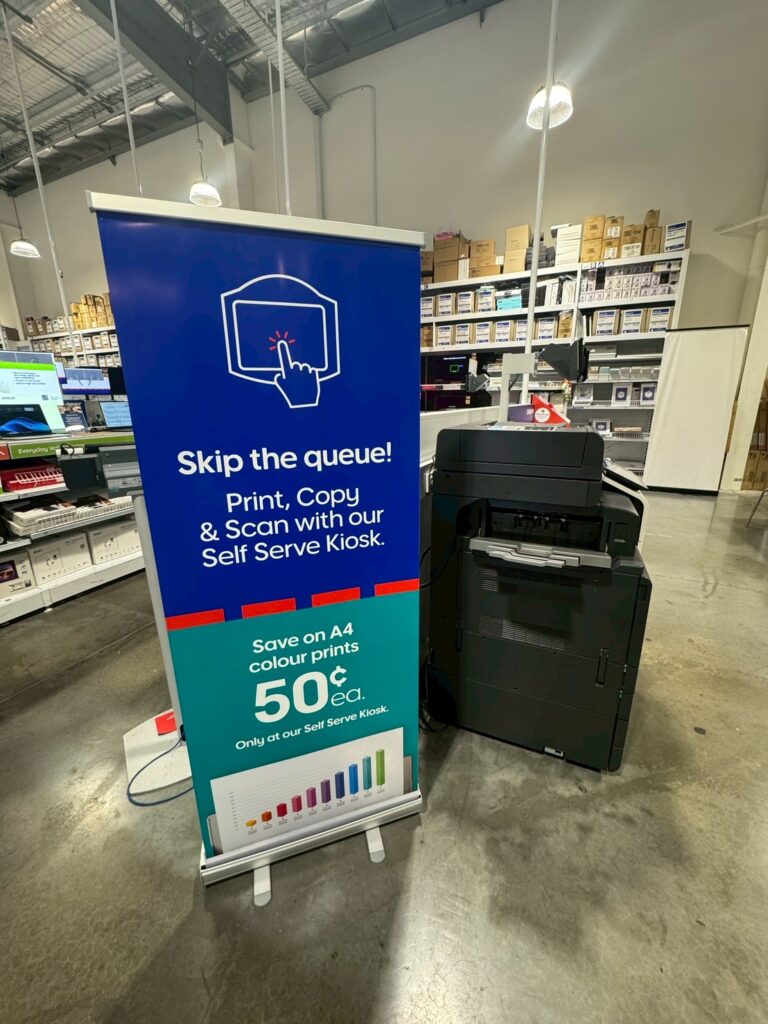
    I had read on other expats’ blogs that printing at Officeworks was easy, but when we located the self-serve machines, I was initially completely baffled. The system had entirely changed from what older blogs described.

    There was no longer any need to purchase a physical printing card. Instead, the process had evolved into a surprisingly frictionless, modern workflow. You simply email the documents you want to print to a specific Officeworks address. Within moments, you receive an automated reply with a QR code. You walk up to the printer, scan the QR code from your phone, and your print job instantly appears on the screen ready to select. For payment, you tap your credit card at the start, authorize a preset dollar amount, and any unused balance is instantly refunded. Since black-and-white prints were incredibly cheap—just 11 cents per page—the whole process barely cost anything. Navigating it by trial and error made me realize just how much things had changed from what I originally researched.

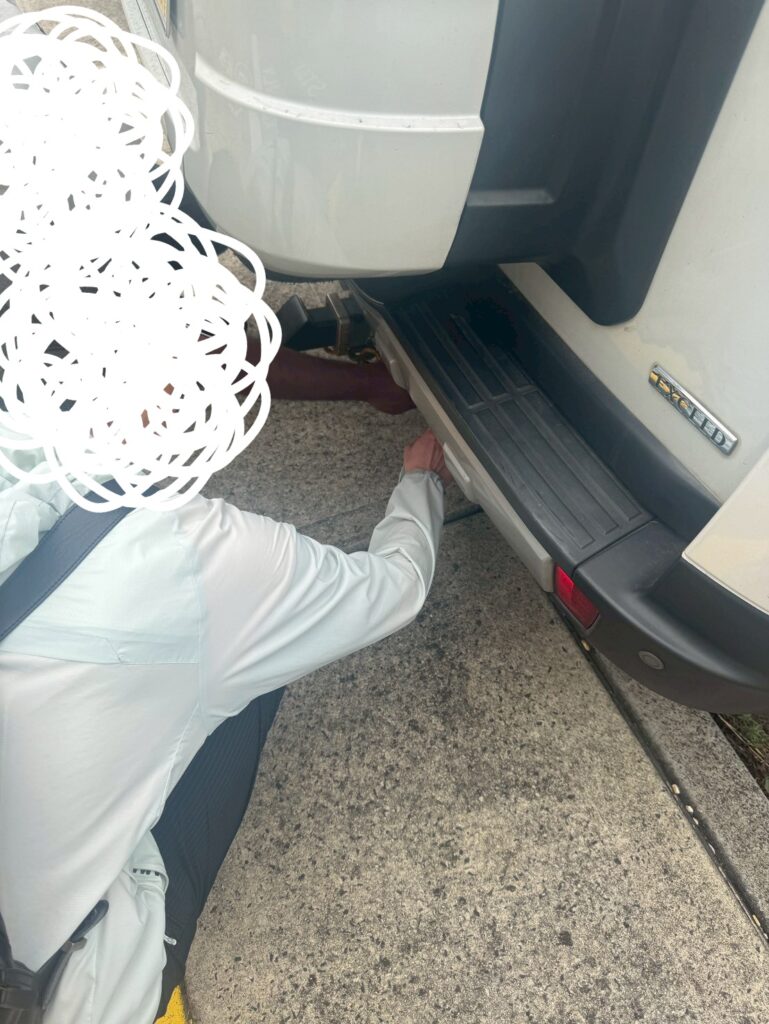
    With the fresh documents in hand, we were ready to head to VicRoads. But just before putting the car in gear, a sudden instinct told me to check if all the vehicle’s exterior lights were actually working. I walked to the back, and my heart sank: the left brake light was completely dead. During the marketplace inspection the day before, I had been so hyper-focused on the engine bay and mechanical vitals that I completely forgot to check the most basic safety lights. It felt like a total rookie mistake.

    1. A Crash Course in Tail Light DIY (And the Plastic Packaging Trap)

    I quickly pulled out my phone to see if a replacement was possible for a novice. It looked like a relatively simple fix depending on the cause, so we decided to try fixing it ourselves. Luckily, there was a tool shop right next to Officeworks, so I ran in and bought a screwdriver.

    Then came a classic roadblock—though I’m not sure if it’s uniquely Australian or just a universal frustration: the heavy-duty plastic clamshell packaging on the screwdriver was fused together so tightly that it was physically impossible to open with bare hands. Defeated, I walked back into the shop and asked if they could help me open it. The staff member kindly grabbed a pair of heavy scissors and sliced it open for me, finally making the tool usable.

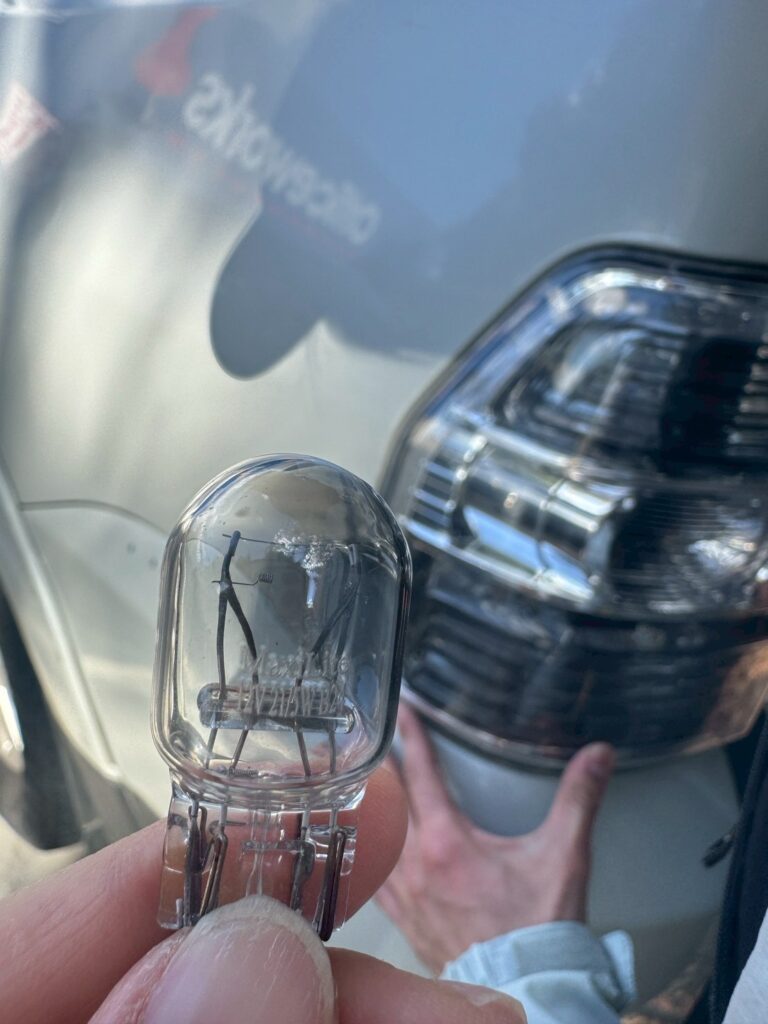
    Armed with the screwdriver, I removed the tail light cover in the parking lot. To my relief, the issue was just a burnt filament in the bulb—something we could easily fix. We walked over to an auto parts store, which was also conveniently located nearby. I handed the dead bulb to the staff and asked for an exact match. They brought out the correct bulb, and I bought it on the spot.

    Back at the Pajero, I slotted the new bulb into the socket to check if it would light up. Nothing happened. For a second, panic set in, and I started worrying that the issue might be a deeper electrical fault. But on a whim, I flipped the bulb upside down and plugged it back in. Boom—it lit up perfectly! It turns out it was just inserted backwards. I screwed the cover back on, and the tail light was officially cured. We had no more worries left.

    1. The VicRoads Bureaucracy and the Paradox of “Airbnb Parking”

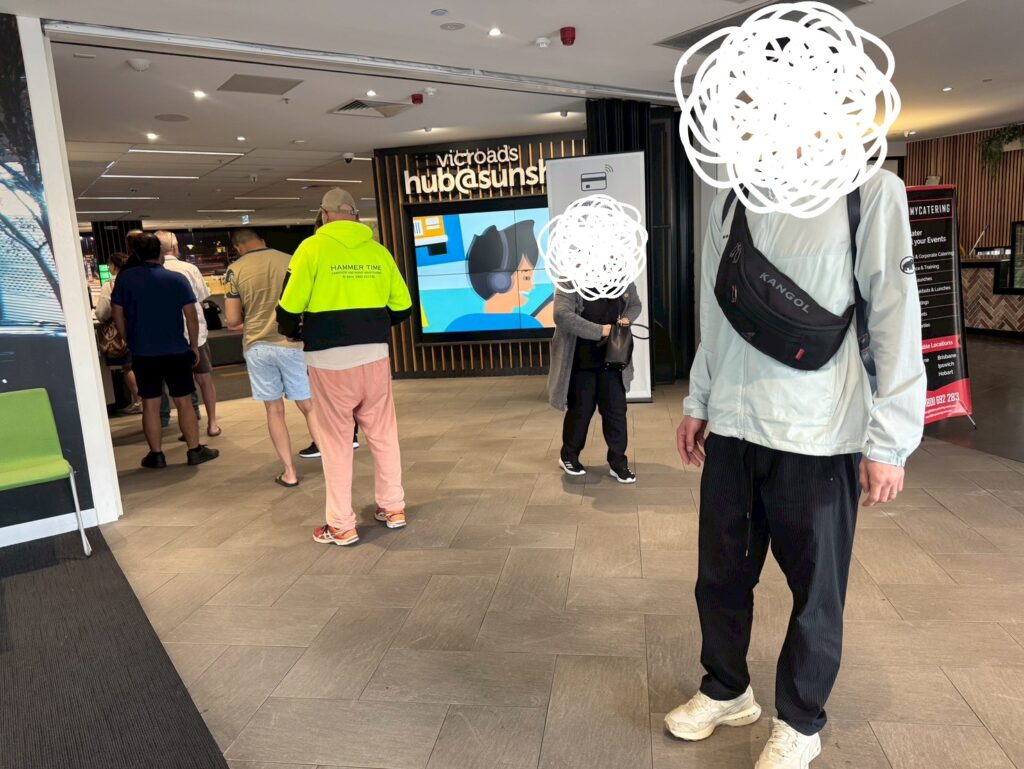
    Because of our unexpected roadside mechanics session, our planned 8:30 AM arrival slipped to just after 10:00 AM. We pulled into the Sunshine VicRoads branch, and my anxiety spiked again when I saw the parking lot was absolutely packed. I thought we had missed our window, but incredibly, a car pulled out right in front of us, and we snagged a perfect spot.

    Inside, the branch wasn’t as crowded as we feared, though a massive line began forming right behind us shortly after we arrived. Our first task was to create a VicRoads Customer Number, which is required for vehicle ownership. During this process, the staff member checked my passport and then asked for something completely unexpected: “Can I see your Japanese credit card?” I still have absolutely no idea why a foreign credit card was required for identity verification, but I handed it over, and it did the trick.

    With the customer number generated, we moved on to the transfer. I handed over our freshly printed documents, and the process went smoothly. After paying a transfer fee of over $500, the Pajero was officially registered under my name! However, the staff dropped a small surprise: they mentioned that our REGO (registration) only had about one month remaining. I could have sworn the seller told us there were two months left, but since it could easily be renewed online later, we wrapped up our paperwork and left. On our way out, I glanced at a digital news screen near the exit and saw Prime Minister Sanae Takaichi appearing on the broadcast. It was a surreal moment realizing that Australian media actively reports on Japanese politics.

    On our way home, we stopped by a shopping mall anchored by Woolworths—one of Australia’s two major supermarket chains. We managed to stock up on household essentials like body wash, which happened to be on a massive 50% off half-price sale.

    Feeling accomplished, we drove back to our Airbnb. This brought us to another classic culture shock regarding our accommodation. The Airbnb listing had explicitly stated “parking included,” so we had initially parked the Pajero in a spot we assumed was ours. However, we quickly found out that the spot belonged to another resident. When we asked where our “included parking” actually was, the host told us to just park it on the street.

    In Australia, the streets are massive and wide enough that street parking is completely standard and legal. But coming from Japan, where overnight street parking is non-existent and strictly illegal, it felt completely unbelievable. Leaving our brand-new asset out on the curb left us feeling incredibly nervous about potential theft.

    To make matters worse, as soon as we stepped out of the car after parking it on the street, I checked the back and noticed the left tail light was completely dead again. A wave of anxiety hit me—had we been scammed into buying a broken, unreliable car?

    Hoping it was just a loose connection, I unscrewed the tail light housing once more. I pushed the bulb into the socket as hard as I could, and this time, I felt a distinct, solid “click” as it locked into place. I turned the lights back on, and it glowed beautifully. It turned out that during my frantic morning repair, I simply hadn’t pushed it in far enough. Slowly but surely, I am starting to understand the quirks of this Pajero, and it’s turning out to be an incredibly fun learning experience. You really have to push those components until they click!

    We finally parked our new beast safe and sound at our Airbnb, feeling a massive sense of relief. With our vehicle registration officially sorted, our major car checklist was finally complete. Tomorrow, we take our next big leap into our future mobile life: heading out to visit caravan dealers to get a real feel for our upcoming home! Stay tuned for Day 4!

  • Melbourne Day2

    Melbourne Day2

    Navigating Aussie Banks and Taking a Leap of Faith on a 260,000km Pajero (Day 2)

    Our second day in Victoria was an absolute whirlwind. We woke up with two massive missions to tick off: open a local bank account in the morning, and inspect a potential 4WD in the afternoon.

    Leaving our Airbnb, we walked to Deer Park station to experience our very first public transport ride. For those familiar with Melbourne, buying a Myki card, topping it up, and tapping on/off is just basic daily life. But as newcomers, we were watching every step carefully, especially seeing transit officers board the train to check cards. In Japan, train ticketing and gates are incredibly rigid, so navigating a new system always comes with a small, nervous thrill of wondering, “Am I doing this right?”

    The train pulled into Southern Cross Station, and stepping out, we were blown away by the Melbourne CBD. The towering skyscrapers, the relentless energy, and the crowds felt incredibly premium—giving us instant vibes of Tokyo’s high-end districts like Omotesando or Ginza. The dramatic contrast from the quiet streets of Deer Park made us realize just how vibrant this city is.

    1. Opening Our NAB Account: The “Branch Hold” Solution and First Taste of Coffee Culture

    We navigated the bustling streets to our designated NAB (National Australia Bank) branch to get our local banking sorted. The staff were fantastic, making the process straightforward and shifting us into an appointment room right away to set up our accounts.

    However, a unique logistical puzzle popped up at the very end: “Where should we mail your physical debit cards?”

    As working holiday makers planning to head out to regional areas for farm work, we didn’t have a permanent address yet. Sensing our dilemma, the bank teller offered a brilliant solution: “No worries, we can just hold the cards right here at this CBD branch, and you can come pick them up once they arrive.” We gladly accepted this convenient arrangement and wrapped up our session, feeling relieved to have our first Aussie bank account. (As a side note, due to a hilarious system mix-up, the cards ended up being mailed to an old address anyway after we left—but that’s a chaotic story for a later chapter!)

    After leaving the bank, we realized how hungry we were and decided to drop into a local cafe. This was where I ordered my very first Flat White. Even though it didn’t have any fancy latte art, the flavor was absolutely delicious. The cafe itself had a beautiful, bright atmosphere with large glass windows. We also ordered some banana bread, which tasted amazing.

    Following our coffee break, we wandered around the city and stumbled into a narrow lane filled with vibrant wall art. Seeing the artwork so seamlessly integrated into the city grid made me feel that, unlike in Japan, art and daily life are beautifully fused together here in Melbourne. We spent the rest of the morning admiring the iconic laneways before heading out for our next mission.

    1. The Marketplace Inspection: The 260,000km Shock and a Critical Caravan Feature

    The afternoon brought us to the most nerve-wracking part of our day: our very first car inspection via Facebook Marketplace. We took the train out to Cranbourne Station to meet the seller. Buying a car directly from an individual through social media in a foreign country was definitely a bit intimidating.

    Thanks to the seller, who turned out to be incredibly polite and professional, we were instantly put at ease.

    Since this vehicle was destined to tow a heavy caravan trailer for our future mobile life, I carefully checked the mechanical vitals. I inspected the engine bay to ensure there were absolutely no active fluid leaks, verified the RWC (Roadworthy Certificate) and REGO, and ran a check to ensure it had no stolen history. Crucially, I also checked if the car was equipped with an Electric Brake Controller—a vital system used to electronically manage the caravan’s brakes. Although the car didn’t have one installed, I knew it could be fitted later as an aftermarket upgrade. Even when factoring in that extra cost, the price of the vehicle was incredibly reasonable, so we decided to buy it on the spot.

    The interior showed honest wear and tear consistent with its age. But mechanically, it was sound. However, the biggest surprise for us was the odometer: 260,000 kilometers.

    A Quick Culture Shock:
    To Australians, 260,000 km on a well-maintained diesel engine is just getting warmed up. But in Japan, the car market is completely different. A car with 100,000 km is generally considered “ancient” and heavily depreciated, often seen as ready for retirement. Seeing a car running beautifully at 260k was our first real taste of how vast Australia is and how tough vehicles need to be here!

    The seller handed over a clean service history, and we wrapped up the transaction feeling confident in our new choice.

    1. Owning My First Car: A Raining CBD Drive, Roundabouts, and a 2kg Feast

    I processed a direct bank transfer on my phone, received the keys, and immediately hopped online to secure comprehensive car insurance with AAMI, choosing them for their budget-friendly rates.

    With that, it was official. At 29 years old, this rugged 2006/2007 Mitsubishi Pajero became the very first car I have ever owned in my life.

    The initial rush of excitement was instantly replaced by pure adrenaline. My first ever drive in Australia was behind the wheel of a massive, heavy SUV, cutting directly through the heavy traffic of the Melbourne CBD—all while it was absolutely pouring rain.

    Gripping the steering wheel tightly, I pulled into a petrol station to fill up the tank. That’s when we encountered another major surprise regarding fuel prices. In Japan, diesel (light oil) is heavily subsidized and significantly cheaper than regular unleaded petrol. Watching the diesel prices sit higher than petrol at the pump was a surprising twist to our budget planning!

    On the long drive back, I faced my very first Roundabout—and it happened to be a challenging two-lane one. Even though I had researched the rules beforehand, like when to enter and how to indicate when exiting, my nerves were through the roof. I also noticed that the gap between cars here is incredibly tight—often less than half the distance people keep in Japan. While my driving certainly wasn’t perfect, the surrounding drivers were incredibly skilled, smoothly moving around me and adjusting their distance with perfect control. Because of this, I didn’t feel scared of the other cars at all. Furthermore, unlike in Japan, everyone strictly adheres to the speed limits, meaning there was no one tailgating or trying to rush me, which made the experience much less intimidating.

    On our way home, we stopped by Coles for the first time. We ended up buying a massive 2kg pack of Australian beef mince for just $24! Thrilled by how cheap it was, we headed back to our Airbnb, excited at the thought of cooking up a big batch of homemade hamburger patties.

    The journey back to Deer Park took about two agonizing hours under the blinding storm, and my shoulders were completely stiff from gripping the wheel so hard. One thing we noticed immediately is that Australian roads are much rougher and more uneven compared to the smooth, perfectly flat asphalt of Japan—the Pajero was shaking and rolling the whole way.

    We finally parked our new beast safe and sound at our Airbnb, feeling a massive sense of relief. But the vehicle mission isn’t completely over just yet. Tomorrow, we have to tackle the official paperwork: heading straight to VicRoads to officially transfer the Pajero’s ownership into my name! Stay tuned for Day 3!

  • Melbourne Day1

    Melbourne Day1

    Landing in Melbourne: Our Smart Dual-SIM Strategy and the Ultimate Head Start for Our New Life (Day 1)

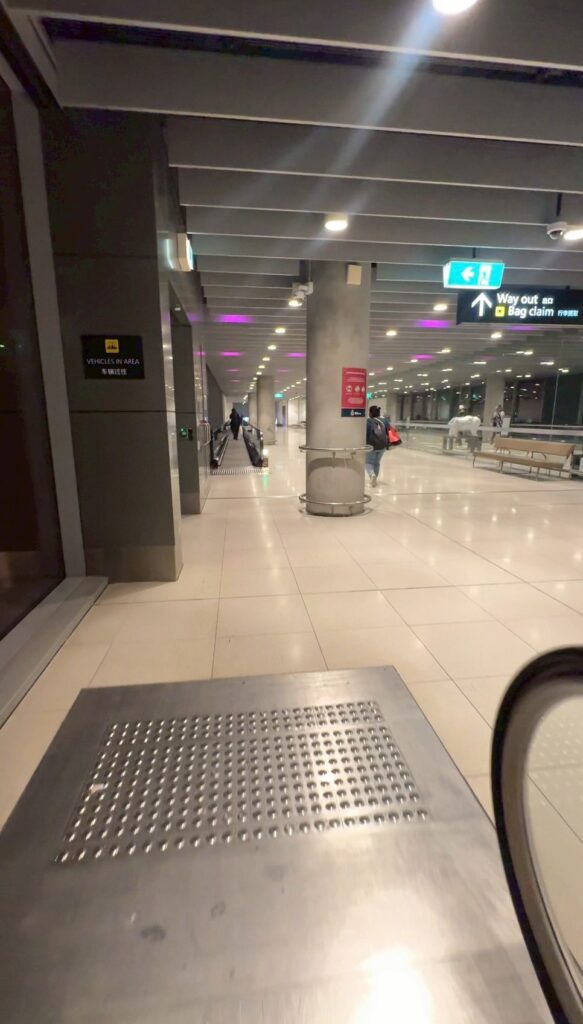
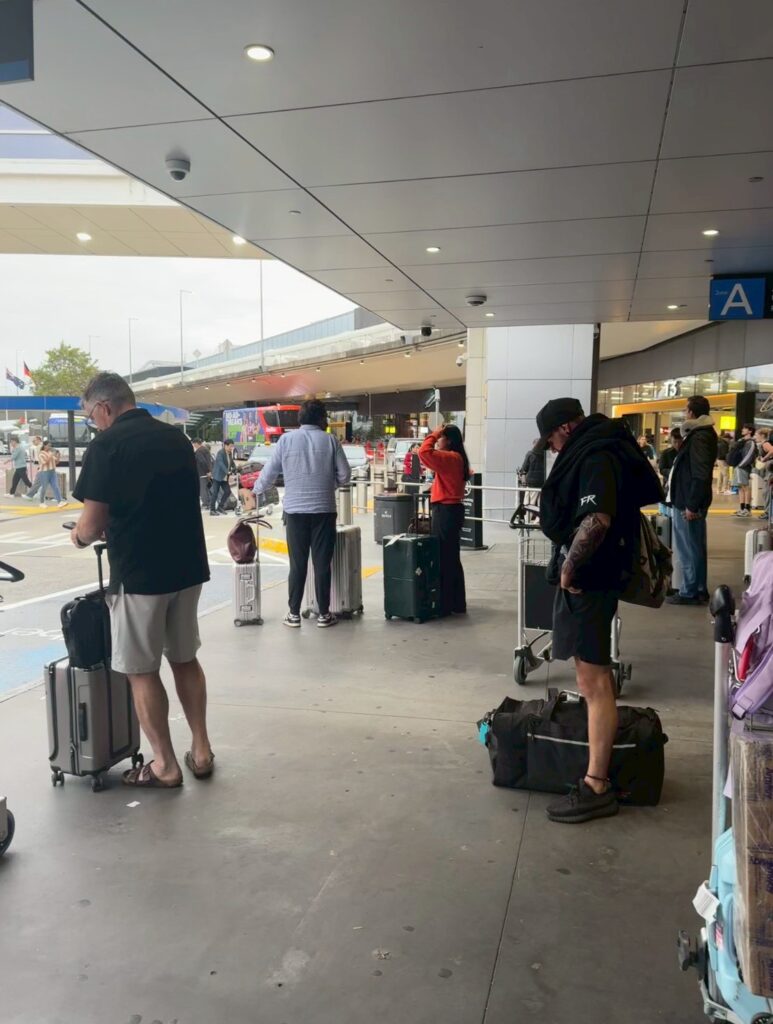
    Stepping out of Melbourne Airport, the very first thing my wife and I noticed was the distinct quality of the Australian summer.

    We had just left Japan in the middle of winter, completely bundled up in heavy layers. Stepping outside, we were greeted by a wave of warmth well over 30°C. However, unlike the suffocating humidity of Japanese summers, the air here was incredibly dry and crisp. While the temperature itself felt manageable at first, the real shock was the intensity of the sun—the sunlight felt sharp, almost piercing our skin. Standing in the terminal, sweating under our winter clothes, it finally sank in: We had actually arrived.

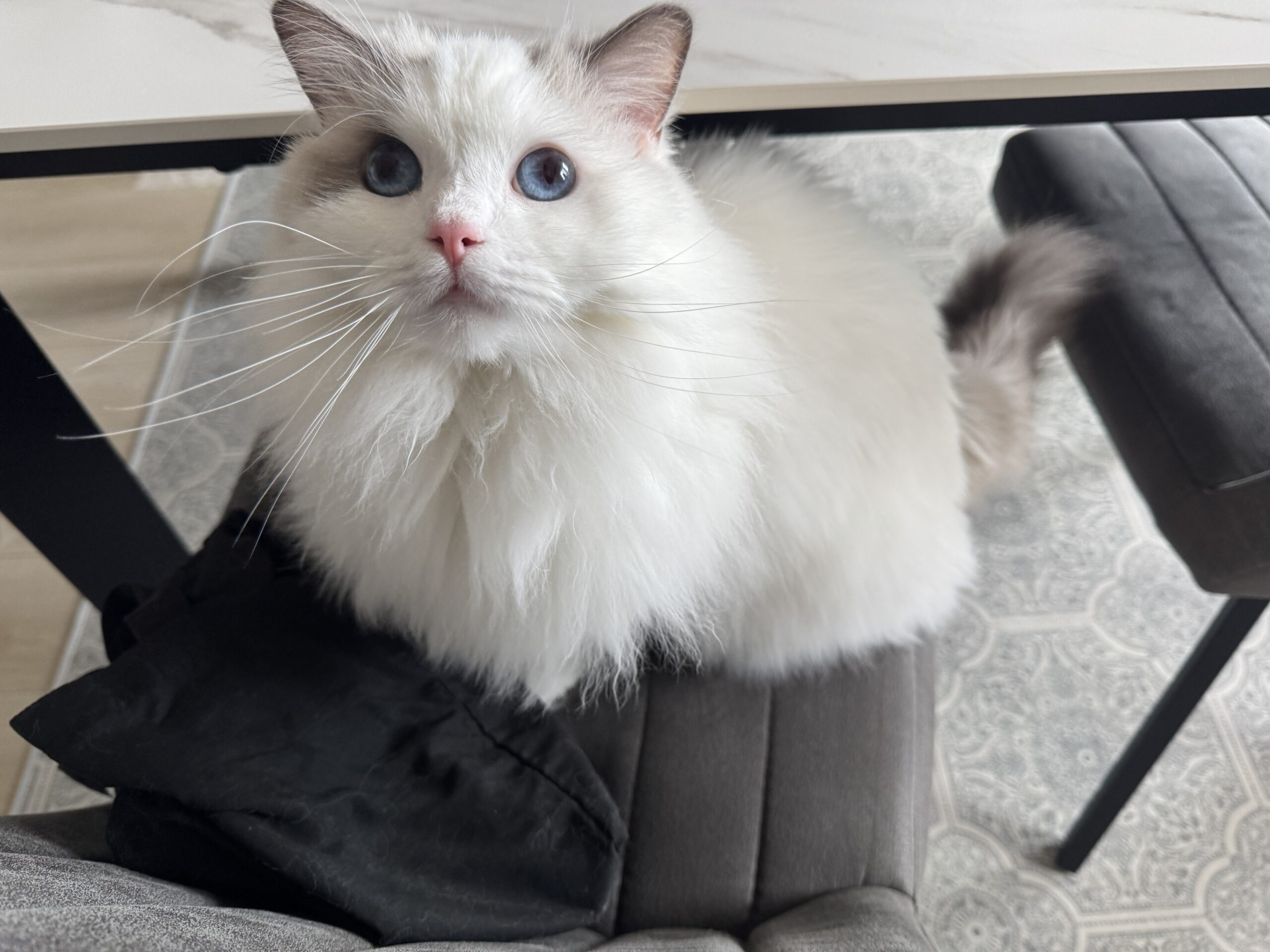
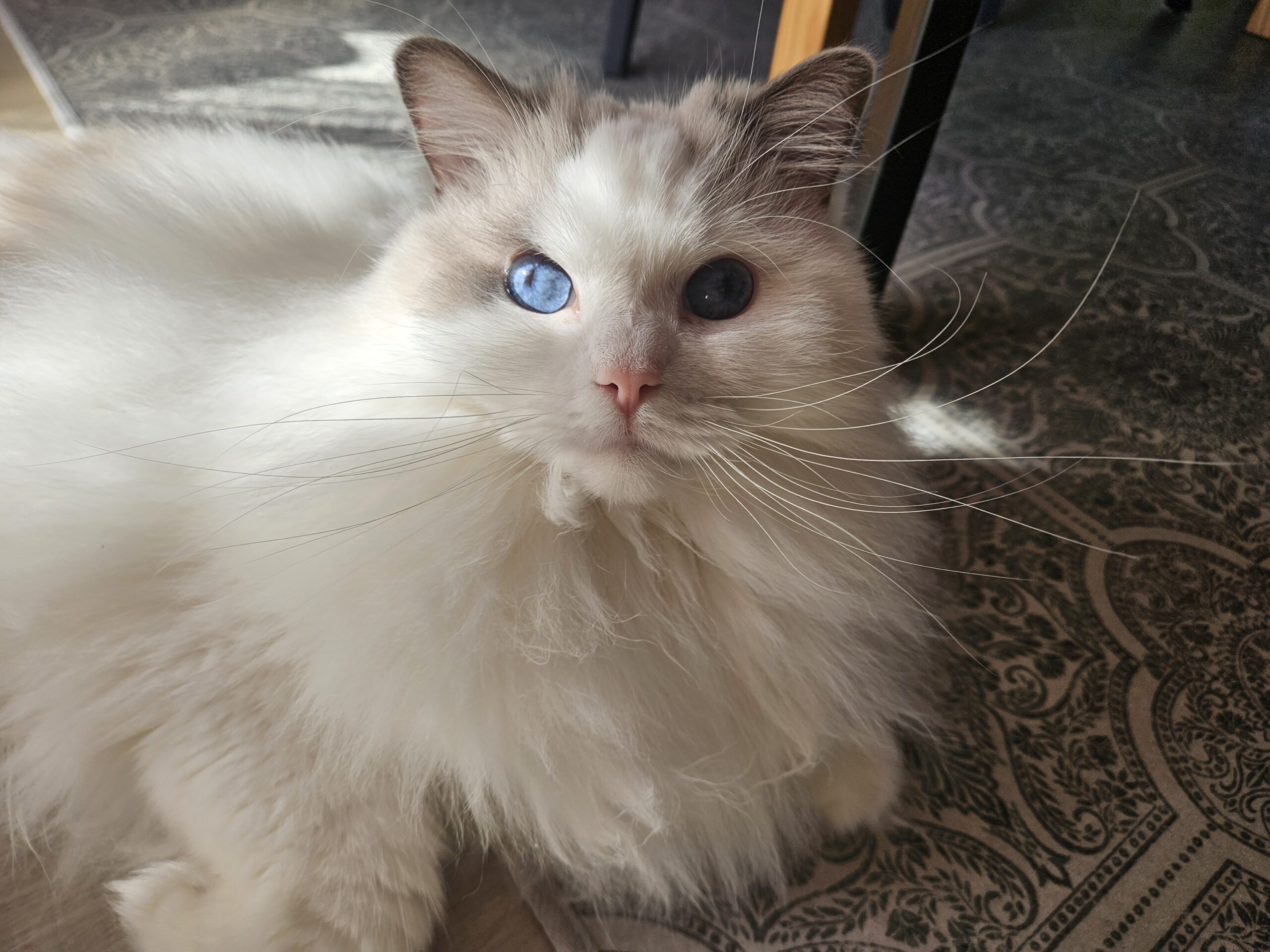
    However, there was no time to romanticize the moment. Our hearts were heavy with worry. Bell, our beloved Ragdoll cat, wasn’t with us. Due to strict quarantine laws, she had been taken straight to a 10-day isolation facility. For the next ten days, our minds would be constantly consumed with anxiety, hoping she was okay.

    But our new life was starting right then and there. Our immediate goal in Australia was clear: head out to a regional area, complete 88 days of specified agricultural work to secure our Second Working Holiday Visa, and set up a stable foundation for our long-term journey. To make that happen, we had a mountain of tasks to conquer on Day 1.

    1,The Dual-SIM Strategy: Why We Bought Telstra & Amaysim for Long-Term Security


    Our immediate, absolute priority at the airport was getting internet access. Without it, we couldn’t even call a ride. Since we were heading to the countryside for our 88 days of farm work, I had heavily researched Australia’s notorious reception gaps.

    Our goal was to balance cost-efficiency with high reliability. To achieve this, we set up a Dual-SIM system right at the terminal using eSIMs:

    Telstra (eSIM): 300GB / 365-Day Plan. (Luckily, they were running a special promotion at the time, allowing us to secure a massive 300GB block! We chose them for their bulletproof coverage in remote outback and regional farming areas).

    Amaysim (eSIM): 200GB / 365-Day Plan. (Powered by the Optus network, a highly smart choice to cut daily data costs while maintaining an excellent connection).

    By purchasing long-term, pre-paid yearly data blocks instead of monthly recharges, we secured a solid internet environment while keeping our budget perfectly under control. The moment the signal bars lit up on our phones, we breathed our first sigh of relief.

    2.Escaping to Deer Park: Our Shared Airbnb Reality and the Urgent Need for a Car

    This Airbnb was a share-house style property. We had our own private room, while the spacious kitchen, living room, toilets, and showers were shared with other guests. A professional cleaning service came about twice a week, so the communal areas were kept remarkably clean.

    Inside our private room, there was no air conditioning, but they provided us with essential supplies like laundry detergent and toilet paper, and we could always ask for refills. The kitchen and refrigerator were highly organized, with specific shelves and sections allocated to each room number. This system completely eliminated the common share-house anxiety of “someone stealing my food.”

    While this environment was perfectly fine and comfortable enough for humans, living here with our cat, Bell, was absolutely out of the question. February in Melbourne is intensely hot, and leaving a long-haired Ragdoll in a room without air conditioning was a dangerous life-or-death risk.

    To survive the regional areas, move into an air-conditioned caravan, and tow that heavy rig for our future mobile life, we needed to get a vehicle as soon as possible—a tough, powerful partner.

    Lying on the bed in our temporary room, I pulled out my smartphone and began a furious, non-stop scrolling and research session.

    3,Preparing for Day 2: TFN, NAB Bank Setup, and Insurance

    Moving your life to a new country means drowning in paperwork from day one. Using my phone, I knocked out our Tax File Number (TFN) applications online—an absolute must if you want to work legally in Australia.

    Next, I mapped out our strategy for Day 2: opening our Australian bank accounts. Back in Japan, we had already wisely set up our Wise accounts to handle international money transfers smoothly. Now, we needed a local physical bank account with NAB (National Australia Bank) to link everything together. I used my phone to double-check the required identification documents and the nearest branch in the CBD.

    At the same time, I was scanning Facebook Marketplace for that tough 4WD to be our future rig. When a promising listing caught my eye, I immediately fired off a message. The seller replied formally, stating that they had time available and that an inspection would be possible the following day.

    Suddenly, Day 2 became critical. If we liked the car, we would buy it on the spot. That meant I had to spend the rest of the night glued to my phone screen, frantically comparing Australian car insurance quotes while completely exhausted.

    Conclusion: A Taste of Comfort and a Relieved Heart
    For our very first dinner in Australia, we didn’t go to a fancy restaurant or grab local fast food. We cooked a simple, comforting bowl of Japanese Udon that we had packed in our luggage. In a strange, quiet room thousands of miles from home, that familiar, everyday taste was exactly what we needed to unwind.

    Just as we finished eating, a notification popped up on my phone. It was an email from the quarantine facility: Bell had arrived safely and was settling into her enclosure.

    A massive weight lifted off our shoulders. She was safe. We had internet. We had a roof over our heads, a solid plan to hit NAB in the morning, and a car inspection confirmed for tomorrow afternoon.

    We collapsed into bed, utterly spent, ready to conquer the Melbourne CBD and the Facebook Marketplace jungle the following morning.